


To understand the possibilities, it’s important to explore what Agentic AI is, how it differs from traditional AI models, and the types of AI agents driving this transformation.
Before diving in, here’s the complete guide you’ll explore below.
The Rise of Agentic AI
Agentic AI refers to AI systems that don’t just generate output; they take action. These agents can make decisions, plan tasks, execute multi-step workflows, and adapt based on feedback.
The market is growing at an unprecedented pace. According to Precedence Research, the global agentic AI market size is projected to reach up to $199.05 billion by 2034, growing at a CAGR of 43.84%.
This explosive pace reflects a major shift from static AI models to autonomous, action-driven systems.
What Makes Agentic AI?
To understand Agentic AI, we must look at what gives these systems their “agency”. Agentic AI typically includes:
- Autonomy: The ability to make decisions without human intervention
- Goal-orientation: Working towards defined business or operational objectives
- Planning & reasoning: Breaking down tasks into actionable steps
- Adaptability: Learning from outcomes and refining actions
- Multi-tool integration: Using APIs, databases, and applications to execute tasks
In simple terms, agentic AI frameworks allow AI to think, decide, and act—not just respond.
Difference Between Agentic AI and Traditional AI
Traditional AI models answer questions or generate content. They rely heavily on human input.
Agentic AI, on the other hand:
- Operates independently
- Performs multi-step tasks
- Takes decisions in real time
- Triggers actions across systems
- Continuously learns from past performance
This shift is why organisations are accelerating adoption.
What are the Different Types of AI Agents
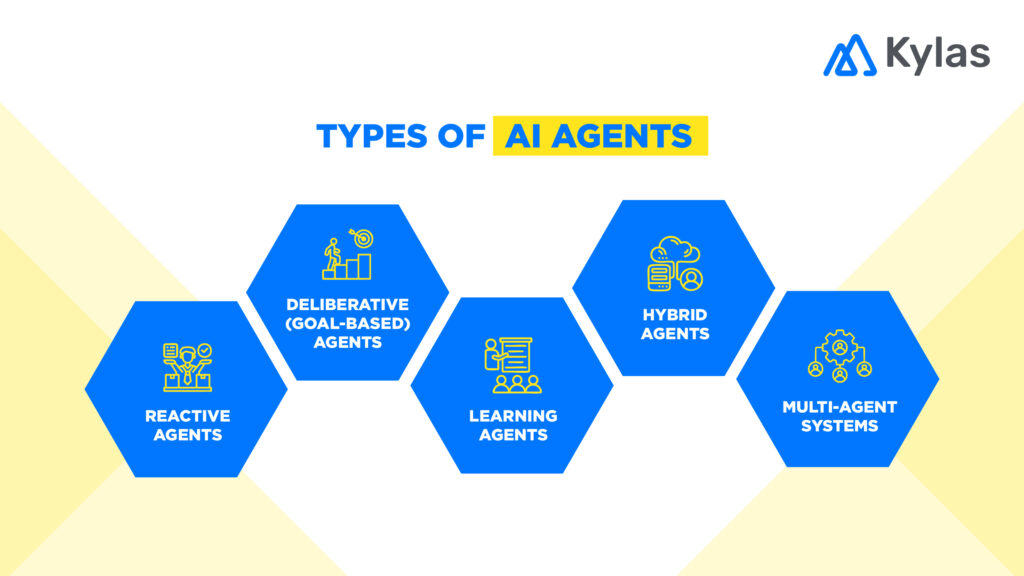
Understanding the different types of agents in AI becomes essential. Here are the core categories:
1. Reactive Agents
These agents respond to stimuli without memory. They are best for quick, rule-based decisions.
2. Deliberative (Goal-Based) Agents
They evaluate possibilities, plan actions, and work backwards from a defined goal.
3. Learning Agents
They improve performance using reinforcement, feedback loops, or machine learning techniques.
4. Hybrid Agents
These combine reactive and deliberative capabilities, ideal for complex enterprise workflows.
5. Multi-Agent Systems
A network of agents collaborating to solve large, distributed problems.
These aspects are crucial when researching AI agents and planning how to build AI agents for business applications.
Real-World Applications of Agentic AI
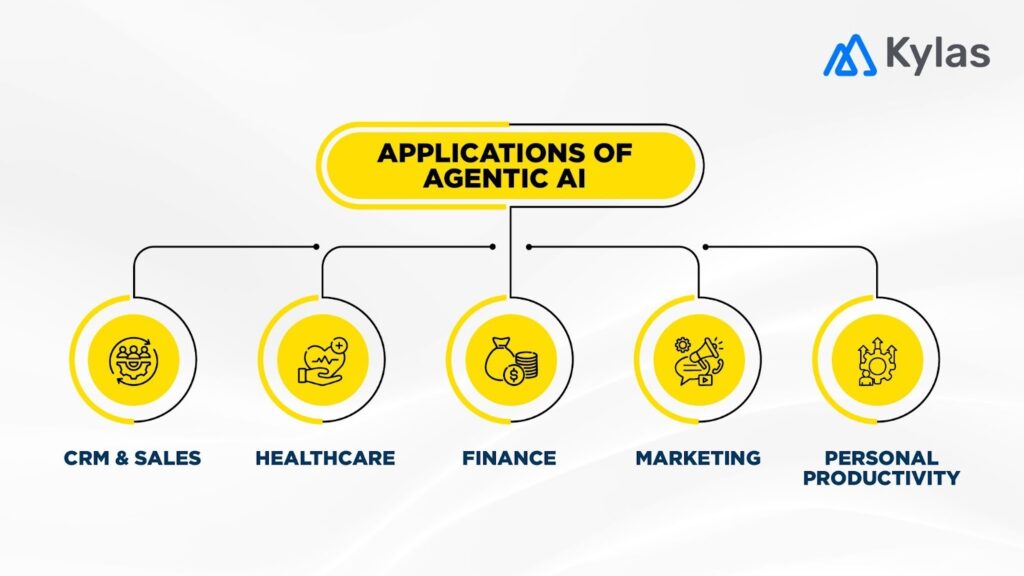
Agentic AI is gaining traction across every major industry. As per DigitalDefynd, over 60% of upcoming enterprise AI deployments in 2025 are expected to include agentic capabilities.
Here’s where they’re already delivering value:
1. CRM & Sales
AI agents can autonomously score leads, enrich customer data, create tasks, and trigger complete sales workflows without human intervention. As a Sales CRM, we at Kylas integrate AI assistance directly into our platform to streamline sales processes and improve productivity through features like AI-powered lead scoring, task automation, and personalised communication.
2. Healthcare
Diagnostic AI agents support clinicians by analysing patient data, medical histories, and imaging results to identify risks with greater precision. They also streamline decision-making by recommending next steps, thereby improving the accuracy and speed of diagnoses.
3. Finance
Portfolio management bots continuously monitor market trends, rebalance investments, and perform risk assessments based on predefined financial strategies. These agents reduce human error and help financial institutions maintain portfolio stability in dynamic market conditions.
4. Marketing
AI agents enhance campaign efficiency by adjusting budgets, testing creatives, and optimising targeting in real time. They also deliver hyper-personalised content across channels, ensuring brands reach the right audience with the right message at the right moment.
5. Personal Productivity
Productivity agents manage recurring multi-step tasks such as scheduling meetings, drafting content, and organising reminders. By automating time-consuming administrative work, these agents allow individuals to focus on strategic, creative, and high-impact responsibilities.
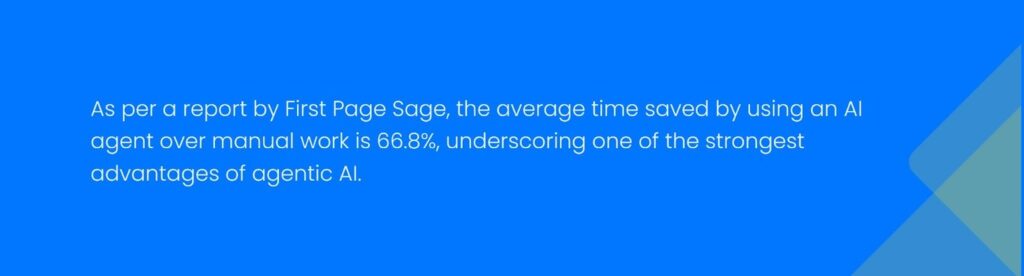
Benefits of Agentic AI
As businesses adopt agentic AI frameworks, the benefits compound quickly:
1. Higher Efficiency
Autonomous agents complete tasks end-to-end without human intervention.
2. Better Decision-Making
Agents analyse real-time data, reducing biases and improving accuracy.
3. Reduced Operational Costs
Automation helps cut down on repetitive manual work.
4. Faster Execution
Agents operate 24/7, accelerating workflows across departments.
5. Scalability
AI agents can handle thousands of tasks simultaneously, making them ideal for growing organisations.
The Future of Agentic AI
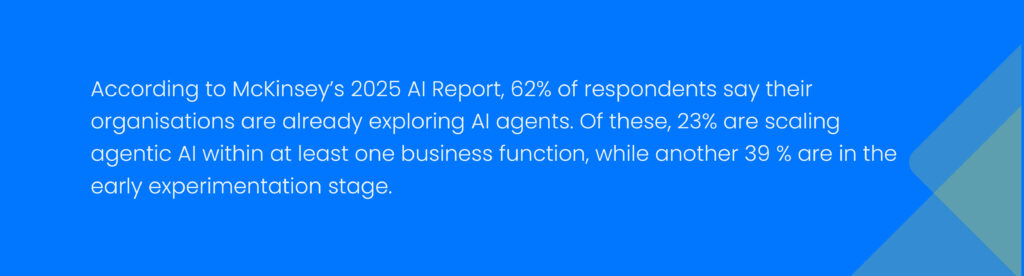
The future is moving towards fully autonomous digital workforces. McKinsey highlights that agentic systems are becoming central to innovation, with enterprises shifting from experimentation to scaling.
Emerging trends include:
- Advanced multi-agent ecosystems
- Fully autonomous enterprise workflows
- Deep integration into ERP, CRM, and supply chain systems
- Natural language interfaces for agent orchestration
- Smarter safety and governance frameworks
As the technology matures, knowing what an agent is in AI and how it works will become an essential skill across industries.
Bottom Line
Agentic AI represents the next leap in artificial intelligence. By understanding Agentic AI and its applications, businesses can unlock autonomous processes, smarter decision-making, and accelerated growth.
With AI agents now driving sales, support, healthcare, finance, and marketing, the shift from traditional AI to agentic systems is inevitable.
As enterprises continue adopting these systems, the companies that embrace agent-driven automation today will be the ones leading their industries tomorrow.